

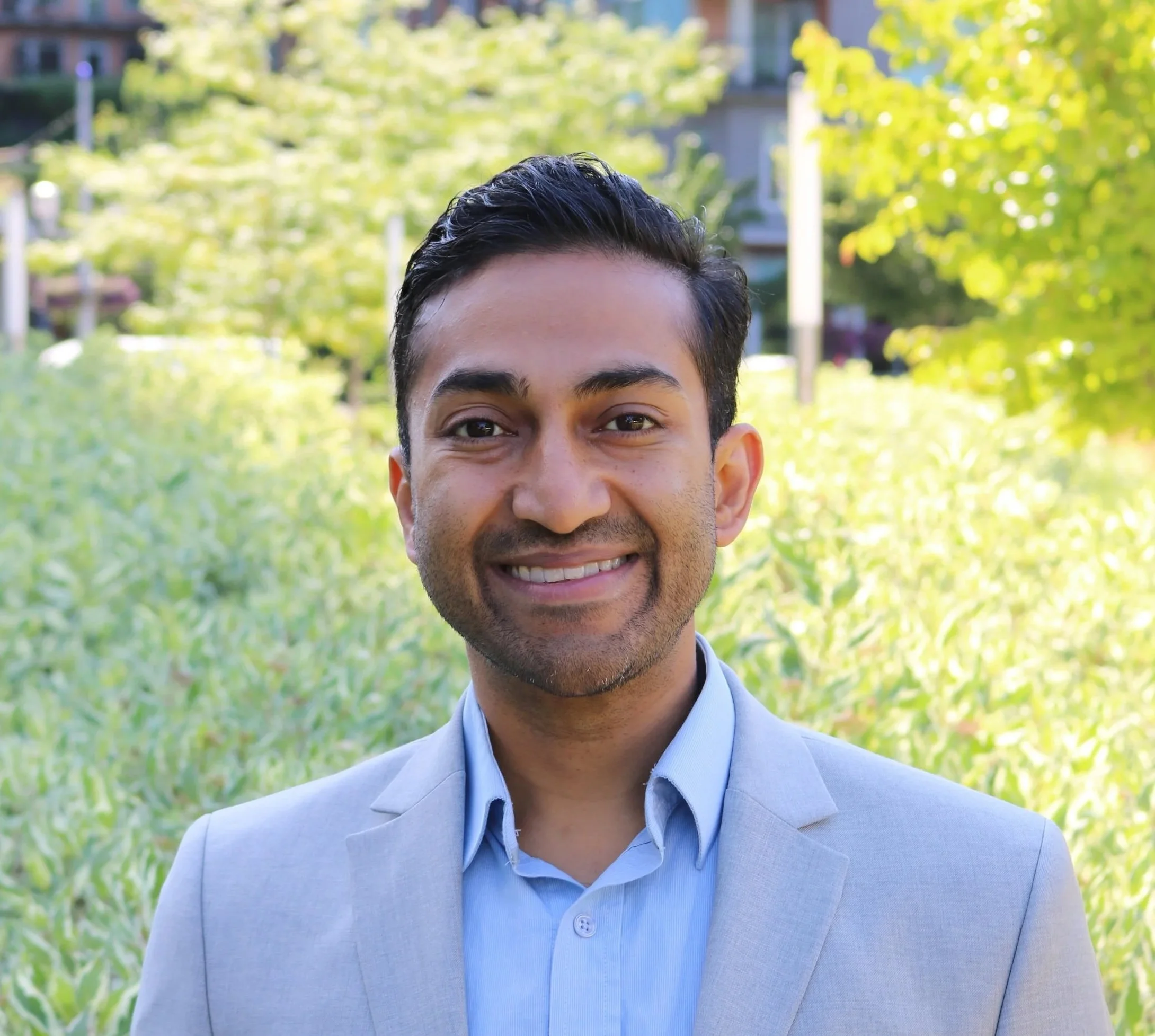
Vinay Prasad is an anti-woke Trump collaborator, but I like his critiques of cancer care, and I suspect I’d like him if I met him.
JERSEY CITY, SEPTEMBER 13, 2026. If I was a real journalist, I’d review Vinay Prasad’s entire oeuvre, including his book Malignant: How Bad Policy and Bad Evidence Harm People with Cancer. I’d seek interviews with Prasad as well as admirers and critics. I’d try to find out exactly what happened during Prasad’s recent stint in the Trump administration.
But I don’t want to do all that. I just want to use Prasad to make a quick point: experts can be complicated. Duh, you say. But as I pontificate to a fresh batch of youngsters this semester, the warning bears repeating.
Prasad is an oncologist and epidemiologist at the University of California San Francisco. I started citing him over a decade ago in blog posts for Scientific American. Prasad presented persuasive evidence that Americans are overtested, overdiagnosed and overtreated for cancer, mental illnesses and other disorders. This is a vast, underreported science story.
Prasad co-founded the site Sensible Medicine, which looks skeptically at medical practices and takes seriously the Hippocratic dictum: First, do no harm. Sensible Medicine reinforces my cranky anti-medicine perspective.
So what makes Prasad “complicated”? After the covid pandemic struck in 2020, Prasad accused federal officials of overreacting. He challenged the benefits of masking, shutting down schools and businesses and mandating covid vaccines (when those became available).
Prasad was applying First, do no harm to the pandemic. But his medical critiques had a jagged political edge. Prasad bashed Anthony Fauci, head of the National Institute for Allergy and Infectious Diseases and a favorite of liberal politicians and media.
Prasad defended, sort of, Robert Kennedy, now Trump’s secretary of health. And Prasad proposed that that Trump’s attacks on universities are justified, because universities are too woke and academic research too wasteful.
I disagree with Prasad on these issues: I think Fauci was trying to save lives in a fast-moving, uncertain situation, just as he did in the 1980s when he led anti-AIDS efforts; Kennedy is doing more harm than good; and Trump doesn’t give a shit about science, truth or democracy, he cares only about power.
In May 2025, Prasad joined the Trump administration to oversee an FDA office that evaluates vaccines and other treatments. He reportedly ran afoul of Trump attack dog Laura Loomer and biotech execs trying to make a buck, and in April 2026 he returned to his university.
To get a sense of how controversial Prasad is, check out his Wikipedia page.
So here’s the question: Should I stop citing Prasad because he “collaborated” (my term) with the Trump regime? Because he discerns upside in Trump and Kennedy? I’m woke, Prasad is anti-woke. Shouldn’t this guy be dead to me?
No. I still find much to admire in Prasad. He’s smart, driven by evidence, fearless, unafraid to take on the medical establishment. Check out his recent columns on the U.S. Preventive Services Task Force; the high price of cancer drugs; statins. Yes, he’s arrogant and sharp-tongued, and he takes too much pleasure in tweaking liberal academics. But he welcomes pushback and debate.
I don’t have hard-and-fast rules for deciding whether to trust or reject an expert. I make these decisions on a case-by-case basis, and emotions, gut feelings, often come into play. Here are a few other complicated cases:
John Ioannidis. Ioannidis has been pointing out problems with the peer-reviewed scientific literature for decades. When the covid pandemic struck, Ioannidis, like Prasad, argued that federal authorities were overreacting. He got bashed for airing this view on conservative media. I continue to admire Ioannidis because I find his analyses of the scientific literature sound. Also, I was at a weekend workshop with Ioannidis a while back, and I liked him. He struck me not as an ideologue but as a modest, earnest researcher who goes where data take him.
Oliver Sacks. Personal interactions also shape my judgement of Sacks. I found him as warm, wide-eyed and charming in person as on the page. Sacks, a neurologist, wrote many marvelous books about patients whose brain disorders illuminate mind-body mysteries. Last year The New Yorker revealed that Sacks fabricated details of some case studies, especially in his bestseller The Man Who Mistook His Wife for a Hat. In a column on the controversy, I say Sacks “remains one of my favorite mind-body explorers.” (Science writers I admire disagree with me, see comments.)
Noam Chomsky. Until recently, there was no intellectual I admired more than Noam Chomsky. Since the 1960s, he has dominated both linguistics/cognitive science and political discourse. See his powerful 1967 essay “The Responsibility of Intellectuals.” I profiled him in Scientific American and The End of Science. In 2018, I did a Q&A with Chomsky in which he called Trump and his Republican allies “criminally insane.” Chomsky’s moral as well as scientific judgements seemed rock-solid. Then the media reported that Chomsky was chummy with Jeffrey Epstein and gave the sexual predator advice on defending himself. Ugh. I struggle to forgive Chomsky.
Steven Pinker. A friend once told me he would read a Pinker book only if I put a gun to his head--and probably not even then. Yeah, Pinker’s “everything-is-fine-and-getting-better” rhetoric can be annoying, especially now that things are getting worse. I also dislike Pinker’s anti-woke diatribes and his defense of the deep-roots theory of war. I nonetheless appreciate how Pinker uses statistics to nudge us away from despair. And I like the guy, whom I’ve met several times. He’s given three talks to my school. Rebecca Goldstein, one of my favorite thinkers, married Pinker, so he can’t be all bad.
Woody Allen. Vicki thinks it’s a mistake to include Allen. But I want to make the point that moral judgements affect my views of artists as well as scientists. And Allen is an expert, sort of, on the human heart. Allen used to be one of my favorite filmmakers. Then I watched “Allen V. Farrow,” an investigation of sexual abuse allegations against him. I came away thinking Allen is a creep and a bully. I can’t watch Allen’s films anymore.
Sabine Hossenfelder. I disagree with this renegade physicist on lots of things, like free will. But I like and admire Hossenfelder for the same reasons I like and admire Vinay Prasad: She’s smart, funny, fearless, she cuts through bullshit. I’m always curious about what Hossenfelder has to say, especially when she agrees with me (sort of).
I could go on and on. I’ve profiled many leading scientists, and all are at least a little complicated. See for example my takes on Christof Koch, Alison Gopnik, Stuart Kauffman, Douglas Hofstadter, Robert Trivers, Deirdre McCloskey and other subjects of my (free online) book Mind-Body Problems.
Of course I’m complicated too. Almost invariably, when someone says something positive about my work, the praise comes with the caveat: I don’t agree with everything Horgan says, but…
So what’s the takeaway for my students? This: There are plenty of genuine experts out there, but no one is infallible, not even me. It’s complications all the way down.
Oh, and that goes for artificial experts, too.
Further Reading:
For more, check out this list of “Cross-Check” columns since 2023.