

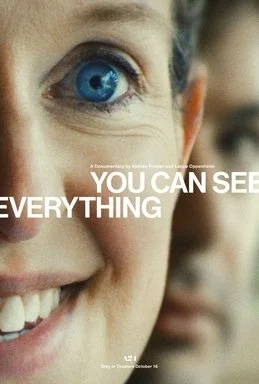
What is going on inside this woman’s head?
HOBOKEN, OCTOBER 30, 2026. It’s 1995. O.J. Simpson is on trial for the murders of Nicole Simpson and her companion Ron Goldman. Prosecutors claim DNA tests prove O.J. killed his ex-wife and Goldman. Blood found at the murder scene, in O.J.’s car and on a glove recovered from his home belongs to O.J. and the victims.
Simpson’s attorneys challenge the DNA evidence, arguing that the blood could have been contaminated, perhaps deliberately, by investigators. In “O.J.’s Blood and the Big Bang, Together at Last,” New York Times science reporter writer George Johnson muses over the trial’s philosophical implications.
Johnson imagines philosophers like Karl Popper questioning the case against O.J. According to Popper, all evidence is provisional, subject to falsification, whether you’re trying to establish the validity of the big bang or the guilt of a suspect. Johnson concludes that “even in science, truth is always tentative. Even in science, the facts are inevitably open to interpretation.”
Johnson’s 1995 essay pops into my head as I mull over You Can See Everything, Nathan Fielder’s documentary about Elizabeth Holmes, the Stanford dropout who founded the medical-diagnosis firm Theranos. Theranos marketed a device that could supposedly carry out as many as 1,000 tests on a single drop of blood. The device fell short of the hype. Holmes, once hailed as the youngest self-made female billionaire ever, was convicted of fraud and sentenced to 11 years in prison.
In 2023, Holmes and her partner Billy Evans, heir to a hotel empire, allow Fielder to film them and their two children in the month before she goes to prison. Fielder is the ideal person to make a film about Holmes. In The Rehearsal and other work, Fielder blurs the line between what is real and what is simulated. He and Holmes are both performance artists.
Rather than re-litigating the case against Holmes, Fielder seems intent on delving into her psyche. The film’s title comes from a text Holmes sent Fielder before filming began, which promises he will “see everything” about her and her family. But Fielder cannot see what matters most, which is what’s going on in Holmes’s head.
Holmes presents herself to Fielder as absolutely, 100-percent honest. She never lied. Never! She says the Theranos device worked. Or it could work, in principle, or it would have worked if she’d been allowed to keep tweaking it. But she never lied about the device or anything else.
Could Holmes be self-gaslighting? That is, has she brainwashed herself into believing her own lies? Fielder himself seems to agonize over these questions.
Although who knows what Fielder is really thinking? He’s pretty inscrutable, too. The one person in You Can See Everything who’s easy to read is Holmes’s partner Billy Evans, who’s a transparently greedy, narcissistic control freak.
In one scene, Fielder shows Holmes and Evans a clip of the old comedy routine “Who’s on first,” in which Abbott tells Costello about a baseball player named “Who.” The comedians talk past each other, because when Abbott says “Who’s on first,” Costello thinks Abbott is asking a question, not making a statement. Hilarious.
When Fielder asks Holmes what she thinks of the routine, she says it’s funny. When Fielder presses her on why it’s funny, Holmes looks confused. Fielder explains that the two meanings of the word “Who” lead to comical miscommunication. Holmes says she didn’t get that.
Here’s my interpretation of this scene: Holmes understands the stupid Abbott-and-Costello routine perfectly, but at first she doesn’t understand why Fielder is making a big deal out of it. Then Holmes realizes Fielder is offering her an excuse for her crimes: she has a cognitive deficit that prevents her from understanding how people misunderstand her.
Only then does Holmes say she doesn’t get “Who’s on first.” And only then does Billy Evans, who also seems initially puzzled by why Fielder is playing the clip, enthusiastically agree that yes, Elizabeth’s mind is so unusual that she misses things that seem obvious to normal people.
Just to be clear: My interpretation is that Holmes is lying when she says she doesn’t get “Who’s on first.” Just as she’s lying--consciously, deliberately lying--when she says she never lied. Can I be sure of that? No. Only Holmes knows what she’s really thinking.
The film keeps zooming in on Holmes’s face. Fielder seems to be trying to peer through those huge, luminous eyes into Holmes’s soul. What’s in there? Who knows. Fielder is bashing his head against the solipsism problem, the inability of each of us to know, really know, what’s going on, if anything, in anyone else’s head.
In his 1995 Times essay, George Johnson speculates that in the future brain scans might be able to “read the memories” of a suspect to determine guilt or innocence. But Johnson warns that “this neural data, like the DNA tests, would also be subject to interpretation.”
Yes, I agree, science can’t solve the solipsism problem. We can never be absolutely sure what’s going on in another person’s head. Even if we all get brain implants that allow us to communicate telepathically via wifi, we’ll still be baffled by each other, we’ll still find ways to gaslight each other and ourselves.
But come on, here in the real world, we can often determine guilt or innocence beyond a reasonable doubt. The Times recently published “evidence” that an “accomplice” helped O.J. kill Nicole and Ron Goldman. Bullshit. I don’t need to invoke philosophical skeptics like Popper or Kuhn to dismiss the accomplice hypothesis as clickbait unworthy of The Times.
The DNA evidence alone convinces me that O.J. and only O.J. murdered Nicole Simpson and Ron Goldman. If a neighborhood camera had been in the right place on the night of the murders, it would have shown O.J. stabbing Nicole and Ron to death (although a modern defense attorney would no doubt argue that the video is an AI-generated fake).
And forget the solipsism problem. The evidence presented at the trial of Elizabeth Holmes proves beyond a reasonable doubt that she knowingly, deliberately committed fraud. When she says she never lied, she’s lying.
Oh, and by way, science has also proven beyond a reasonable doubt that the big bang theory is true.
Further Reading: