

My Doubts About Optogenetics, Which Just Won a Nobel Prize
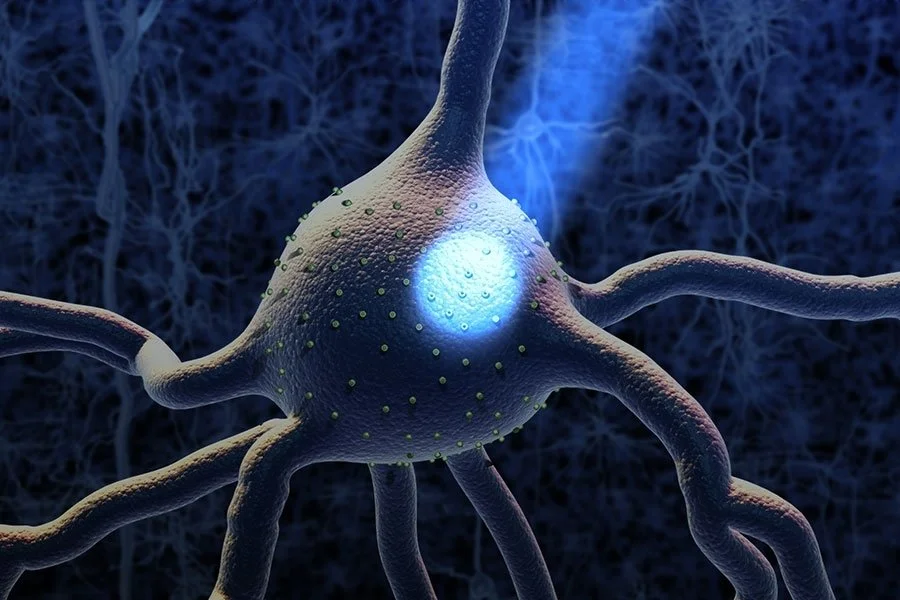
This is the kind of image that accompanies reports on optogenetics. Cool, huh?
HOBOKEN, OCTOBER 10, 2026. Three scientists just won the Nobel Prize in Physiology or Medicine for work on optogenetics, a method for monitoring and manipulating brain cells. The Nobel Foundation says optogenetics is giving us insights into “neurological and psychiatric disorders” and helping “solve one of humanity’s great mysteries: how our incredible brain works.” I bashed optogenetics hype in Scientific American in 2013 (see here and here). Then other science journalists bashed me for being too critical. I think my 13-year-old old columns hold up pretty well, so I’m posting revised, updated excerpts:
Optogenetics, which was invented in the early 2000s, involves tweaking the genes of neurons so they become sensitive to light. Researchers can then trigger or suppress firing by the altered neurons by stimulating them with light-emitting devices inserted into the brain.
Optogenetics could--in principle--allow much more precise manipulation of the brain than implanted electrodes (like those being developed at Elon Musk’s firm Neuralink), as well as drugs, transcranial electromagnetic stimulation and electroconvulsive therapy (a.k.a. shock treatment).
Researchers are exploring the potential of optogenetics for understanding and treating a wide range of brain-based disorders, including obsessive-compulsive disorder, depression, schizophrenia, Parkinson's and post-traumatic stress disorder.
Coverage of optogenetics irks me, for several reasons. Most of the excitement about optogenetics is based on experiments on mice, monkeys and other animals. This research provides limited insights--at best--into complex human illnesses such as depression, bipolar disorder and schizophrenia.
For optogenetics to become an effective method for treating mental illnesses, you need specific knowledge about the illnesses’ neural underpinnings. You should know which neurons or neural circuits are overactive or underactive or otherwise abnormal.
Enthusiasts hope optogenetics itself can provide such knowledge. But optogenetics alters the cells and circuits it seeks to study so much that experimental results might not apply to unaltered tissue.
Moreover, optogenetics is extremely invasive. It not only requires drilling holes in peoples' skulls and sticking devices inside their brains; it also involves altering the DNA of brain cells with viruses or other means.
Here’s a broader problem: I have a hard time getting excited about an extremely high-tech, blue-sky, biomedical “breakthrough”—involving complex and hence costly gene therapy and brain surgery--when tens of millions of people in the U.S. lack decent health care.
As I never tire of reminding readers, the U.S. spends far more on healthcare per capita than any other nation in the world, yet our life expectancy is below that of Panama and Albania. Far from being the solution to our healthcare woes, technology is part of the problem. High-tech tests and treatments contribute to medicine’s high costs and often have dubious benefits. Artificial intelligence is making things worse.
I'm not saying journalists, every time they report on a biomedical innovation, need to analyze its potential impact on our healthcare problems. But knowledge of these immense problems should certainly inform journalists’ reporting on alleged biomedical advances.
According to this 2025 report in Science, so far only one optogenetic application, which addresses eye disorders, “has made it into human trials.” No trials of patients with mental illness are underway. My guess is that if optogenetic treatments turn out to be viable, they will be reserved for the wealthy.
I’m not suggesting the Nobel prize for optogenetics will turn out to be as undeserved as the prizes for shock therapy and lobotomies. I hope someday the technology lives up to the hype. Believe it or not, my criticism of optogenetics and its coverage is meant to be constructive. I get tired of being such a sourpuss.
I understand the desperation of scientists, journalists and everyone for progress in our understanding and treatment of brain disorders. I'm desperate too; mental illness has ravaged people close to me. The question is, How do we balance hope with skepticism?
I don't have any magic formula. My reporting on biomedicine is no doubt at times too skeptical and critical. But that’s because I think most reporting is not skeptical and critical enough.
Further Reading:
More Medicine Does Not Mean Better Health
Psychiatry Is Broken. Can It Fix Itself?